
Aruna Asaf Ali, born on July 16, 1909 and passing on July 29, 1996, lived through almost the entire arc of India’s freedom struggle and early nation building, and her story ties together underground resistance, bold symbolism, and quiet political work after independence.
Key Takeaways
| Question people ask | Short answer |
|---|---|
| Who was Aruna Asaf Ali in Indian history? | She was a leading female freedom fighter, best known for hoisting the Congress flag at Gowalia Tank during the Quit India Movement, similar in iconic status to figures like Rani Lakshmibai of Jhansi. |
| What is special about Aruna Asaf Ali’s contribution? | She stayed active when most top leaders were arrested in 1942, ran underground networks, and kept the movement alive, just as other regional leaders did in the 1857 uprising described for Tatya Tope. |
| Did Aruna Asaf Ali hold any political office after independence? | Yes, she became the first Mayor of Delhi in 1958, echoing the kind of public service legacy we see in profiles like Karmaveer Bhaurao Patil. |
| Why do historians still study her today? | Her life shows how women shaped mass movements on the ground, much like the regional resistance discussed in Puli Thevar’s history, and how they continued shaping policy after 1947. |
| Is Aruna Asaf Ali recognized officially by India? | Yes, she received the Padma Vibhushan, Jawaharlal Nehru Award for International Understanding, and a posthumous Bharat Ratna, placing her in the same national pantheon of freedom fighters highlighted at Indian Freedom Fighters. |
| What can students learn from her biography? | They see how courage, underground organizing, and later institution building all matter, just as we show through layered biographies like Bipin Chandra Pal and Vinayak Damodar Savarkar. |
1. Early Life of Aruna Asaf Ali: Roots of a Rebel
When we walk readers through any freedom fighter’s story, we like to start with the childhood context, because it often explains their later courage, and Aruna Asaf Ali is no exception. She was born into a Bengali Brahmo family in 1909, growing up in a setting that valued education and social reform.
Her schooling in convent institutions exposed her to Western political ideas, while home conversations kept her grounded in Indian realities. This mix of influences is similar to the early-life patterns we see with leaders like Chittaranjan Das, who also moved from professional success into political risk.


From a young age, Aruna questioned social norms, especially around gender roles. This willingness to challenge expectations would later make it easier for her to defy colonial power directly in public spaces.
We often show our readers how similar patterns show up across biography, and in Aruna’s case, the seeds of defiance were clearly planted early.
2. Marriage to Asaf Ali and Political Awakening
Aruna’s marriage to Asaf Ali, a prominent Congress leader and lawyer much older than her, was itself an act of rebellion, since it crossed both religious and age boundaries. Her family opposed the match, but she chose it anyway, which tells us how she treated personal life choices as extensions of her political beliefs.
Moving into Asaf Ali’s circle pulled her right into the heart of nationalist politics. She met leaders, attended meetings, and observed the workings of the Indian National Congress from close quarters, something we also see in spouses of major figures like those around Bajirao Peshwa, where family networks and political life are deeply linked.


Unlike some contemporaries who stayed in the background, Aruna quickly moved from observer to organizer. She threw herself into social work, especially around education and welfare, which gave her a grassroots network before she became a national name.
This mix of personal courage and political partnership is key to understanding why she was ready to take public risks when the movement demanded it.
3. Entry into the Freedom Struggle and Early Arrests
Our readers often relate best to the moment when someone “crosses the line” from sympathy to direct action, and for Aruna that shift came when she joined civil disobedience campaigns in the 1930s. She participated in protests and worked with Congress volunteers, fully aware that arrest was a likely outcome.
She was jailed more than once, including being lodged with ordinary prisoners instead of political ones, in an attempt to intimidate her. Instead of backing down, she organized protests inside jail, echoing the prison resistance we mention in other biographies like Savarkar’s long incarceration.


She also went on hunger strikes to protest jail conditions and discriminatory treatment. These actions not only pressured authorities, they also made her known as a stubborn, unyielding activist within the movement.
By the time World War II started, Aruna already had experience in confronting colonial power both inside and outside prison walls, which set her up for her most iconic act in 1942.
Three key facts about Arun Asaf Ali are highlighted in this infographic. Discover his contributions as a freedom fighter, diplomat, and advocate for India’s independence.
4. The Quit India Movement and the Gowalia Tank Flag
If there is one scene from Aruna Asaf Ali’s biography that everyone remembers, it is August 9, 1942. On that day she hoisted the Indian National Congress flag at Gowalia Tank Maidan in Bombay, signaling the start of the Quit India Movement even as most senior leaders were being arrested.
That single act turned a planned gathering into a call for nationwide revolt. In our coverage of other resistance icons, like Rani Lakshmibai’s last stand, we see how one moment becomes a symbol, and for Aruna this flag hoisting became that symbol.


British authorities reacted harshly, issuing warrants for her arrest. Instead of surrendering, Aruna slipped underground, choosing a risky life on the run so she could keep the movement alive.
Her leadership in this phase is why so many textbooks, documentaries, and discussions still treat her as the face of the Quit India moment, especially from a women’s history perspective.
5. Underground Years: The “Grand Old Lady” of the Movement
Once Aruna went underground, her role shifted from visible protests to hidden coordination, and this is a part of her biography that often gets less attention. She helped publish and circulate underground bulletins, arranged safe houses, and coordinated between local activists when the Congress leadership was behind bars.
The British government even put a reward on her head, which shows how seriously they viewed her activities. We like to compare this networked, behind-the-scenes style of resistance with earlier decentralized fighters such as those in the stories of Puli Thevar, where local alliances mattered as much as big speeches.


During these years she was sometimes called the “Grand Old Lady of the Independence Movement,” even though she was not actually old at that point. The nickname reflected respect for her steadiness and fearlessness, not her age.
By the mid 1940s, Aruna had become a symbol of uninterrupted resistance, in contrast to the visible leadership vacuum created by mass arrests.
6. Personal Details of Aruna Asaf Ali: Life Beyond the Slogans
When we put together a biography for our readers, we always like to pause and summarize key personal details in one place, so here is a quick snapshot of Aruna Asaf Ali’s life data points.
| Field | Detail |
|---|---|
| Full name | Aruna Asaf Ali (née Ganguly) |
| Date of birth | July 16, 1909 |
| Date of death | July 29, 1996 |
| Family background | Bengali Brahmo family |
| Spouse | Asaf Ali, lawyer and Congress leader |
| Key roles | Freedom fighter, underground organizer, first Mayor of Delhi |
| Major recognitions | Lenin Peace Prize, Padma Vibhushan, Bharat Ratna (posthumous) |
These basic facts give structure to the more dramatic episodes in her biography. They also help students and exam-focused readers place her correctly in timelines that include figures like Rana Kumbha and Rani Durgavati, even though she belongs to a much later era.

Beyond these rows in a table, Aruna was known for her sharp wit, blunt honesty, and simple lifestyle. She did not chase wealth or personal publicity, which is why many younger readers discover her relatively late compared to more glamorized figures.
Her personal choices, from marriage to public office, stayed tightly connected to her political convictions throughout her life.
7. Post‑Independence Politics: First Mayor of Delhi
After 1947, many freedom fighters shifted from protest to governance, and Aruna followed the same arc while keeping her independence of mind. In 1958 she became the first Mayor of Delhi, which marked her move into formal civic leadership.
As Mayor, she dealt with very practical problems like city planning, public health, and basic services, which were a far cry from clandestine meetings and flag hoisting. Still, we see a clear continuity between her pre‑independence work and this role, similar to how social reformers like Bhaurao Patil took their ideals into institutions.


She did not limit herself to municipal issues either. Aruna remained engaged with national debates, sometimes disagreeing with top Congress leaders when she felt policies were drifting away from the ideals of the freedom struggle.
This willingness to question her own party’s direction keeps her biography relevant for readers who are interested in how revolutionary idealism survives, or struggles, in peacetime politics.
8. Awards, Honours, and Global Recognition
A big part of any “history of” article is tracking how a person’s reputation grows over time, and for Aruna Asaf Ali that recognition came in waves. Internationally, she received the Lenin Peace Prize in 1965, which reflected global respect for her anti‑colonial and peace advocacy.
Back home, India honored her with the Jawaharlal Nehru Award for International Understanding in 1991 and the Padma Vibhushan in 1992, which is the country’s second‑highest civilian award.


After her death in 1996, the government awarded her the Bharat Ratna in 1997, the highest civilian honour in India, which placed her at the top rank alongside other giants of the freedom struggle. A commemorative postage stamp followed in 1998, helping bring her image into everyday circulation.
On top of this, places like Aruna Asaf Ali Marg in New Delhi keep her name alive on the city’s map, quietly reminding people of the woman behind the road sign.
9. Legacy, Memory, and Comparison with Other Freedom Fighters
When we compare Aruna Asaf Ali with other freedom fighters we have written about, some clear patterns stand out. Like Rani Lakshmibai or Rani Durgavati, she became a symbol of female courage in a heavily male‑dominated political narrative.
However, unlike these 19th‑century warrior queens, Aruna also had a long post‑independence career in democratic politics, which makes her story useful for understanding modern India’s evolution.

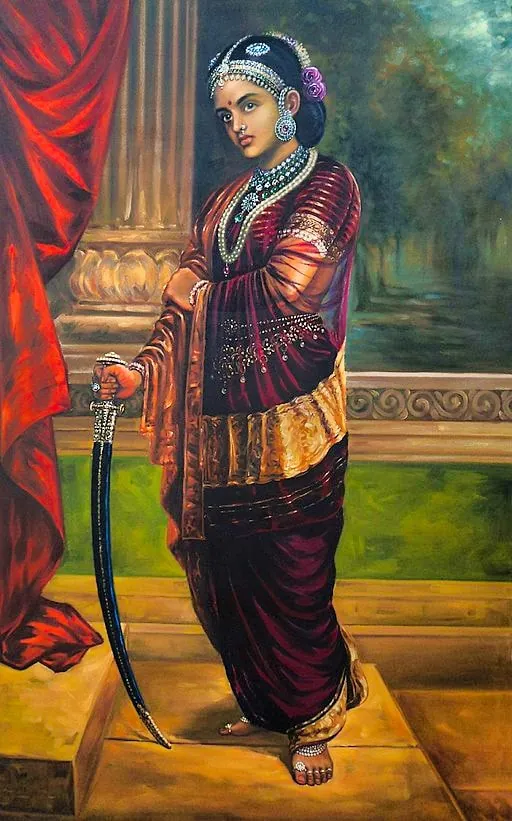
In global terms, her biography appears in multiple languages and she is listed among notable social activists, which helps new generations outside India encounter her story. Within the country, textbooks, road names, stamps, and awards all work together to keep her visible.
Even so, many readers still know her only for the Gowalia Tank flag, which is why we like to highlight her entire life arc, from early rebellion to late‑life honours.
10. Why Aruna Asaf Ali’s Story Still Feels Modern
Aruna Asaf Ali’s biography resonates today because the issues she dealt with are still around, just in different forms. She navigated questions of women’s agency, inter‑faith marriage, state repression, and the tension between protest and governance.
Her life also shows how a person can be both radical and pragmatic, underground organizer and city mayor, which is a useful model for young readers trying to connect ideals to real‑world work.


For us as history writers, she is also a bridge figure. She connects the age of armed and mass resistance, like the 1857 narratives of Tatya Tope, to the era of constitutional politics and city administration.
Reading her story end‑to‑end gives a compact but rich overview of how India moved from colony to republic.
Conclusion
In the end, the biography of Aruna Asaf Ali is not just about one dramatic flag hoisting, it is about a lifetime of consistent, often risky commitment to public causes. From a questioning student in a reformist Bengali household to the “Grand Old Lady” of the independence movement and the first Mayor of Delhi, she kept aligning her personal choices with her political values.
When we place her alongside other freedom fighters, queens, and reformers we cover, Aruna stands out as a rare mix of symbolic courage and quiet institution building, which is exactly why her story is worth revisiting in full, not just in exam footnotes.
