
Abdul Ghaffar Khan remains one of the most significant figures in the history of non-violent resistance, having spent a combined total of 37 to 52 years in prison or exile across British and Pakistani regimes. We recognize his life as a testament to the power of peaceful protest and social reform in the face of extreme political adversity.
Key Takeaways
| Topic | Detail |
|---|---|
| Who was Abdul Ghaffar Khan? | A Pashtun leader and founder of the non-violent Khudai Khidmatgar movement. Find more details at Wikipedia’s Abdul Ghaffar Khan profile. |
| What is his famous nickname? | He is widely known as the “Frontier Gandhi” due to his commitment to Gandhian principles. |
| What was the Khudai Khidmatgar? | A social reform organization known as the “Servants of God” that practiced non-violence. Learn about its origins at BYJU’S Educational Resource. |
| Did he receive any awards? | He was the first non-Indian citizen to receive the Bharat Ratna in 1987. |
| What was his stance on Partition? | He strongly opposed the partition of India and felt betrayed by the eventual outcome. |
| Where can I find his full life story? | His autobiography “My Life and Struggle” provides a comprehensive account of his journey. |
Early Life and Heritage in the North-West Frontier Province
We trace the origins of Abdul Ghaffar Khan to the village of Utmanzai in the Peshawar Valley, where he was born in 1890. His father, Bahram Khan, was a prominent landholder who valued education and community service within the Pashtun society.
Growing up in a region known for its martial traditions, Khan’s early exposure to the harsh realities of colonial rule shaped his future perspectives. We observe that his upbringing combined traditional values with a growing awareness of the need for social modernization.
Khan attended the Edwardes Mission School in Peshawar, an experience that introduced him to diverse perspectives beyond his immediate tribal context. It was during these formative years that he developed a deep sense of responsibility toward the upliftment of his people.
His early adulthood was marked by a refusal to join the British Indian Army, despite his physical stature and family connections. We believe this decision was his first significant step toward a life dedicated to independent political and social activism.
The Influence of Education and Early Social Reform
We highlight that Khan’s primary mission began with education, as he believed it was the only way to liberate the Pashtun people from poverty and ignorance. He founded his first school in 1910, focusing on both religious and secular knowledge to create a balanced curriculum.
These schools, often referred to as “Azad” (Free) Schools, became centers for social change and political awakening in the North-West Frontier Province. We note that his efforts were met with suspicion by British authorities, who saw education as a threat to colonial stability.
His travels through various villages allowed him to witness the internal conflicts and blood feuds that plagued Pashtun tribes. We understand that these experiences solidified his resolve to promote a philosophy of peace and unity among his kin.
By 1915, he was actively working to bridge the gap between different tribal factions through dialogue and shared educational goals. We recognize this period as the foundation of his lifelong commitment to social justice and community welfare.
Foundational Years: The Birth of the Khudai Khidmatgar Movement
In 1929, we saw the formal establishment of the Khudai Khidmatgar, an organization dedicated to the service of God through the service of humanity. Members of this movement were famously known as “Red Shirts” because of the uniforms they wore during their activities.
The organization was unique because it required every member to take an oath of non-violence, even in the face of extreme provocation. We consider this a revolutionary concept in a culture where honor was often tied to physical retaliation.
The movement quickly grew from a local social group into a powerful political force that challenged both British rule and local feudal structures. We emphasize that its core mission remained the social and moral upliftment of the common person.
The Khudai Khidmatgar provided a platform for Pashtuns to participate in the broader Indian independence struggle while maintaining their cultural identity. We observe that Khan’s leadership was instrumental in keeping the movement focused on constructive work and peaceful protest.
A concise visual guide to Abdul Ghaffar Khan’s life and contributions. It highlights five key facts to understand his impact.
Philosophy of Non-Violence in a Martial Society
We find it remarkable that Abdul Ghaffar Khan successfully introduced non-violence to a society with a long history of warfare. He argued that non-violence was not a sign of cowardice but the ultimate expression of courage and strength.
His teachings were deeply rooted in Islamic principles, as he often cited the patience and perseverance of the Prophet as examples of non-violent struggle. We believe this religious grounding helped the movement gain widespread acceptance among the devout population.
The “Red Shirts” were trained to endure beatings and arrests without fighting back, demonstrating a level of discipline that surprised colonial observers. We note that this strategy effectively neutralized the military advantage of the British forces in the region.
Khan’s philosophy extended beyond political protest to include personal transformation and the rejection of revenge. We see this as a critical component of his vision for a more stable and prosperous Pashtun society.
Did You Know?
His non-violent army, the Khudai Khidmatgar, exploded from 1,200 members to over 25,000 in just eight months during 1930.
Source: Khazar Journal of Humanities 2026
Collaborative Years with Mahatma Gandhi and Indian National Congress
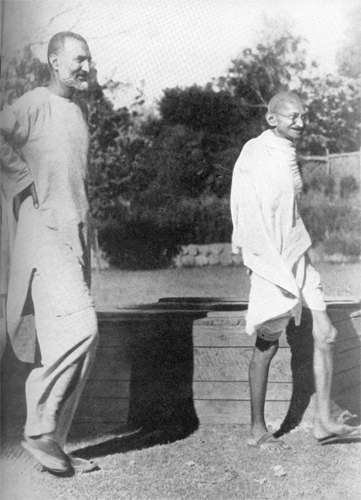
The friendship between Abdul Ghaffar Khan and Mahatma Gandhi was one of the most significant partnerships in the independence movement. We see that they shared a profound mutual respect and a common vision for a united, independent India.
Khan’s commitment to the Indian National Congress brought the North-West Frontier Province into the mainstream of the national struggle. We believe his presence helped bridge cultural and religious divides within the anti-colonial coalition.
During the Salt Satyagraha and other civil disobedience campaigns, the Khudai Khidmatgar played a pivotal role in the frontier regions. We recognize that their participation proved that non-violence was a universal principle capable of uniting diverse groups. Further details on these associates can be found at MK Gandhi’s official associate records.
Gandhi often referred to Khan as his “spiritual brother,” highlighting the deep ideological connection between the two leaders. We observe that their collaboration remained steadfast even during the most challenging periods of the independence era.
The Frontier Gandhi: Leadership During the Independence Movement
As the “Frontier Gandhi,” Khan led massive protests against British policies, particularly the restrictive laws in the frontier provinces. We note that his leadership style was characterized by humility and a direct connection with the grassroots members of his movement.
One of the most tragic and significant events during his leadership was the Qissa Khwani Bazaar massacre in 1930. We remember how the non-violent protesters faced gunfire with extraordinary bravery, a moment that galvanized the entire region against colonial rule.
Despite the violence directed at them, Khan insisted that his followers remain committed to the path of non-violence. We believe this unwavering stance was the key to maintaining the moral high ground and eventually securing political concessions.
His influence extended into the legislative arena, where he advocated for greater autonomy and representation for the people of the frontier. We see his work in the 1930s as a critical period of transition from social movement to political leadership.
Political Struggles and Incarceration After Partition
The partition of 1947 was a moment of great sorrow for Abdul Ghaffar Khan, who had spent decades fighting for a united India. We understand that he felt “thrown to the wolves” by his political allies when the frontier was separated from the rest of the country.
In the newly formed state of Pakistan, Khan faced immediate political challenges and was often labeled a traitor by the authorities. We note that he spent a significant portion of his later life in and out of prison or under house arrest for his political views.
Despite these hardships, he continued to advocate for the rights of the Pashtun people and for regional autonomy within Pakistan. We recognize his resilience during these years as a continuation of his lifelong struggle for justice and self-determination.
His role in the Constituent Assembly was marked by a commitment to democratic values and the protection of minority rights. We can explore his contributions to this period through the Constitution of India Project records.
Literary Contributions: ‘My Life and Struggle’ Autobiography
We value the written legacy of Abdul Ghaffar Khan, particularly his autobiography titled “My Life and Struggle”. Originally written in Pashto, this work provides an intimate look at his motivations, challenges, and philosophy.
The book details his transition from a tribal leader to a global icon of non-violence and social reform. We believe it serves as an essential primary source for anyone studying the history of the 20th-century Indian subcontinent.
In 2021, a comprehensive English translation was released, making his story accessible to a much wider international audience. We note that this edition includes 556 pages and 20 detailed chapters that cover his entire political and personal journey.
Readers can currently find this important historical document in various formats, with the second edition retailing for approximately Rs. 1,495 in 2026. We recommend this text for its deep insights into the ethics of non-violent resistance and Pashtun culture.
Bharat Ratna and International Recognition
In 1987, the government of India conferred the Bharat Ratna, its highest civilian award, upon Abdul Ghaffar Khan. We highlight that he was the first non-Indian citizen to receive this honor, signifying his unique place in the hearts of the Indian people.
The award was a recognition of his lifelong devotion to the principles of non-violence and his role in the freedom struggle. We see it as a symbolic bridge between the shared histories of India and the people of the frontier region.
Beyond India, his work has been recognized by various international organizations and human rights groups. We believe his life story continues to inspire activists and peacebuilders around the world today.
Even as he faced domestic political suppression, his international standing remained that of a moral giant and a champion of peace. We observe that his legacy transcends borders and remains a vital part of the global history of non-violence. General biographical information is also maintained by Britannica’s historical archives.
The Lasting Legacy of Bacha Khan in the 21st Century
We see the legacy of Abdul Ghaffar Khan, affectionately known as Bacha Khan, alive in the institutions and movements he inspired. Modern educational initiatives continue to follow his philosophy that knowledge is the primary tool for social advancement.
His message of non-violence and inter-communal harmony remains highly relevant in 2026 as the region continues to face various challenges. We believe that his life provides a roadmap for resolving conflicts through dialogue and mutual understanding.
The Baacha Khan Trust and other organizations work to preserve his teachings and promote social welfare projects in his name. We recognize these efforts as a continuation of the Khudai Khidmatgar spirit in the contemporary era.
Through the study of his biography, new generations can learn the importance of standing for one’s principles with courage and dignity. We find that his life serves as a timeless example of how one individual can influence the course of history through peaceful means.
Did You Know?
Bacha Khan University (BKUC) has grown to enroll over 10,000 students as of the 2025-2026 academic year.
Source: Bacha Khan University (BKUC) Official 2026
Conclusion
In summary, the biography of Abdul Ghaffar Khan is a profound narrative of sacrifice, resilience, and unwavering commitment to peace. We believe his transition from a local reformer to the “Frontier Gandhi” represents one of the most remarkable journeys in modern history.
His influence persists through the schools he founded, the movements he led, and the literary works he left behind for future generations. We honor his memory as a beacon of hope for those seeking justice through non-violent means in an often violent world.
